Monday, June 17, 2019
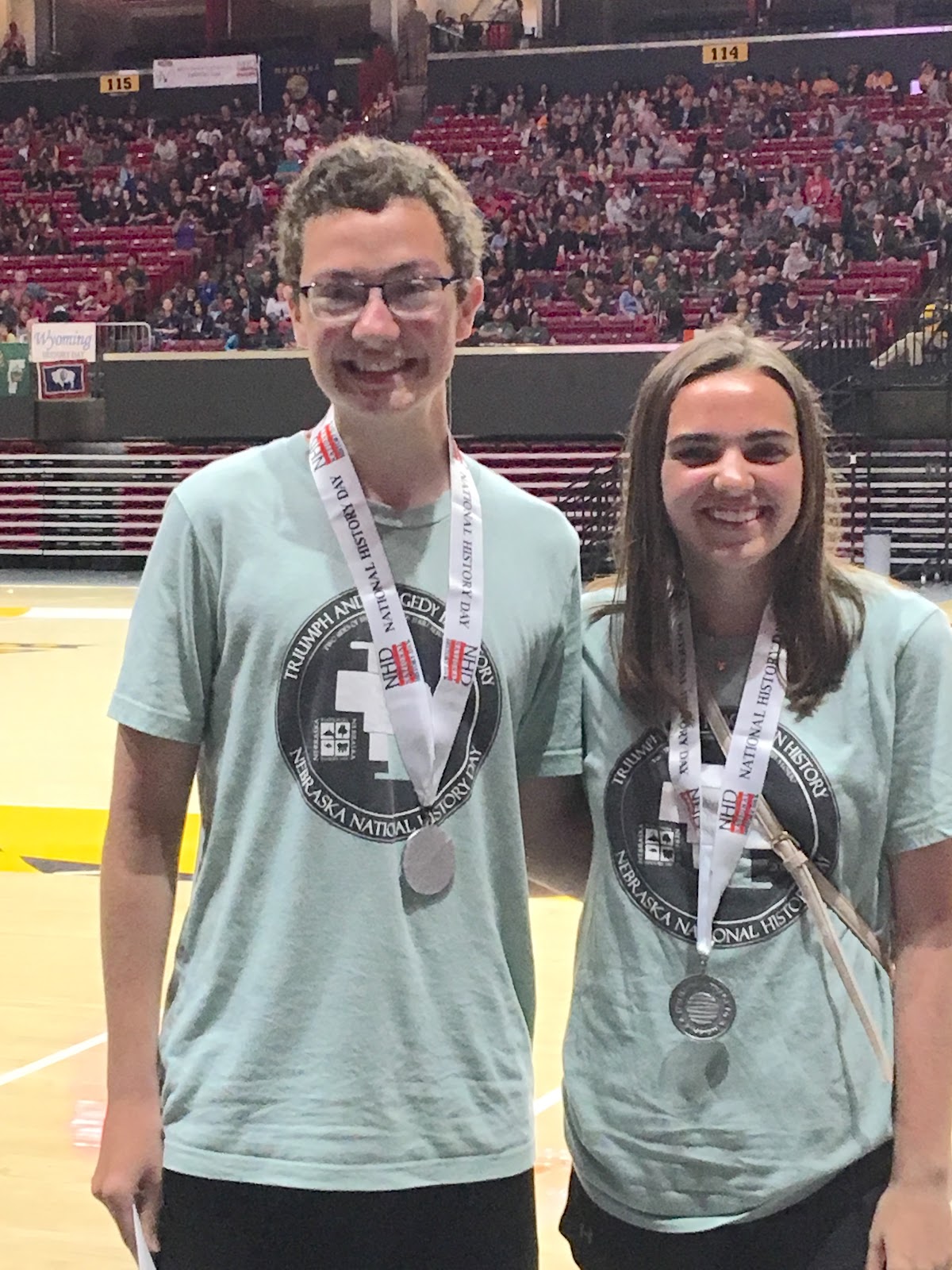
Hyer & Margetts place 2nd at the NHD National Contest
National History Day is an international program for students in grades 6-12. Students compete either individually or in groups in 5 different categories. Students must place in the top 3 at their regional contest and then in the top 2 at the state level before advancing to the national level. Over 3,000 students from across the United States, territories, and military schools throughout the world presented projects based on this year’s theme, “Triumph and Tragedy in History.”
Abigail Hyer and Jameson Margetts placed 2nd at the National contest in the Senior Group Website category! Lauren Collins and Grace Sorenson placed in the top 20! Earning Honorable Mention.
Chadron Public Schools had 6 students (4 projects) compete at the national level:
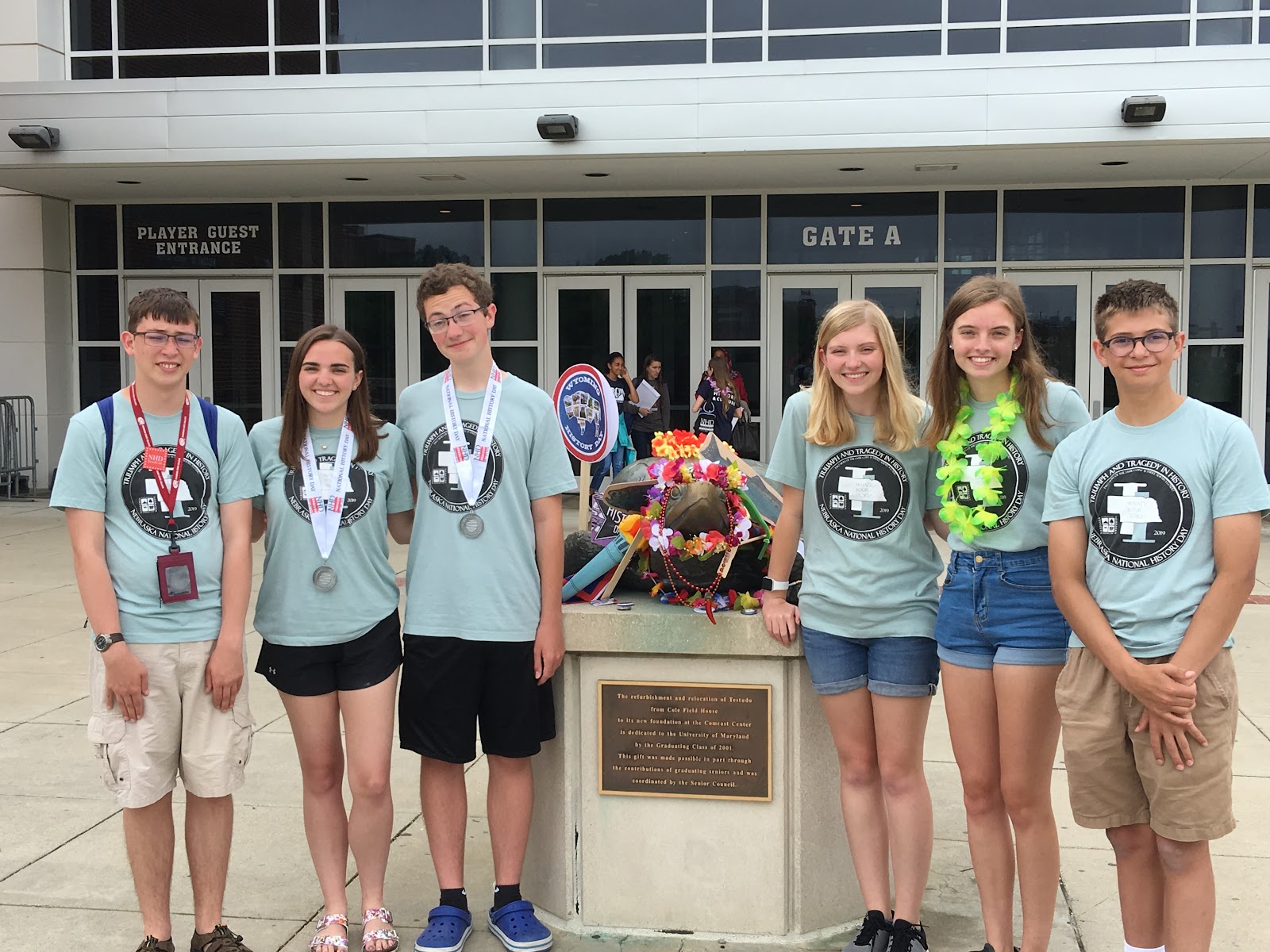
Abby Hyer & Jameson Margetts: The Triangle Shirtwaist Factory Fire: Learning to Triumph over Tragedy (Group Website)
Lauren Collins & Grace Sorenson: Amelia Earhart: A Triumph for Women and a Tragedy Never
Forgotten (Group Website)
Tyler Kaus: Longitude: Making Time Travel (Individual Documentary)
Thomas Kaus: Polish Cipher War: A Polish Triumph that couldn’t prevent a Polish Tragedy (Individual Website)
Congratulations on a job well done!!

Tuesday, May 28, 2019

Friday, May 24, 2019
CHS Teacher, Mike Sandstrom Named Nebraska History Teacher of the Year
 Michael Sandstrom Named
2019 Nebraska History Teacher of the Year
(Press Release, David Jespersen, Public Information Officer, Nebraska Department of Education)
Michael Sandstrom, an American history and civics teacher at Chadron High School in Chadron, Nebraska was recently named the 2019 State History Teacher of the Year, an award sponsored by The Gilder Lehrman Institute of American History.
The History Teacher of the Year Award highlights the crucial importance of history education by honoring exceptional American history teachers from elementary school through high school. The award honors one exceptional K-12 teacher from each state, the District of Columbia, Department of Defense schools, and U.S. territories.
Sandstrom believes civic competence and historical knowledge should have a prominent role in education. He makes history real and meaningful for his students by connecting them to their own local history and tying that to current events. "Students believe that they possess all the required information at their fingertips, but the power unleashed by the study of history does not come from the memorization of dates and random facts, " Sandstrom says. "My goal, every day, is to make history both relevant and challenging in the hope that they are better prepared for the 21st Century."
Sandstrom will receive a $1,000 award and Chadron High School will become a Gilder Lehrman Affiliate School and weill receive history books and educational materials from the Gilder Lehrman Institute of American History. Sandstrom will also be a finalist for the $10,000 National Histroy Teacher of the Year Award and will receive an invitation to the Gilder Lehrman Teacher Seminar, a weeklong program which offers teachers daily discussions with eminent historians, visits to historic sites, and hands-on work with primary sources.
Sandstrom will be honored with the award at the Nebraska State Council for the Social Studies annual conference on June 6.
Mike Sandstrom is a 2008 graduate of Chadron High School and 2013 graduate of Chadron State College. His wife, Sheyenne is a Second Grade teacher at Chadron Primary School.
Monday, May 20, 2019
Advanced Biology Studies the Nervous System
(Submitted by CHS Sophomore, Alexis Conboy)
When studying the nervous system, one must surely be in awe of its speed and power. The
Chadron High advanced biology class recently explored the nervous system, specifically the
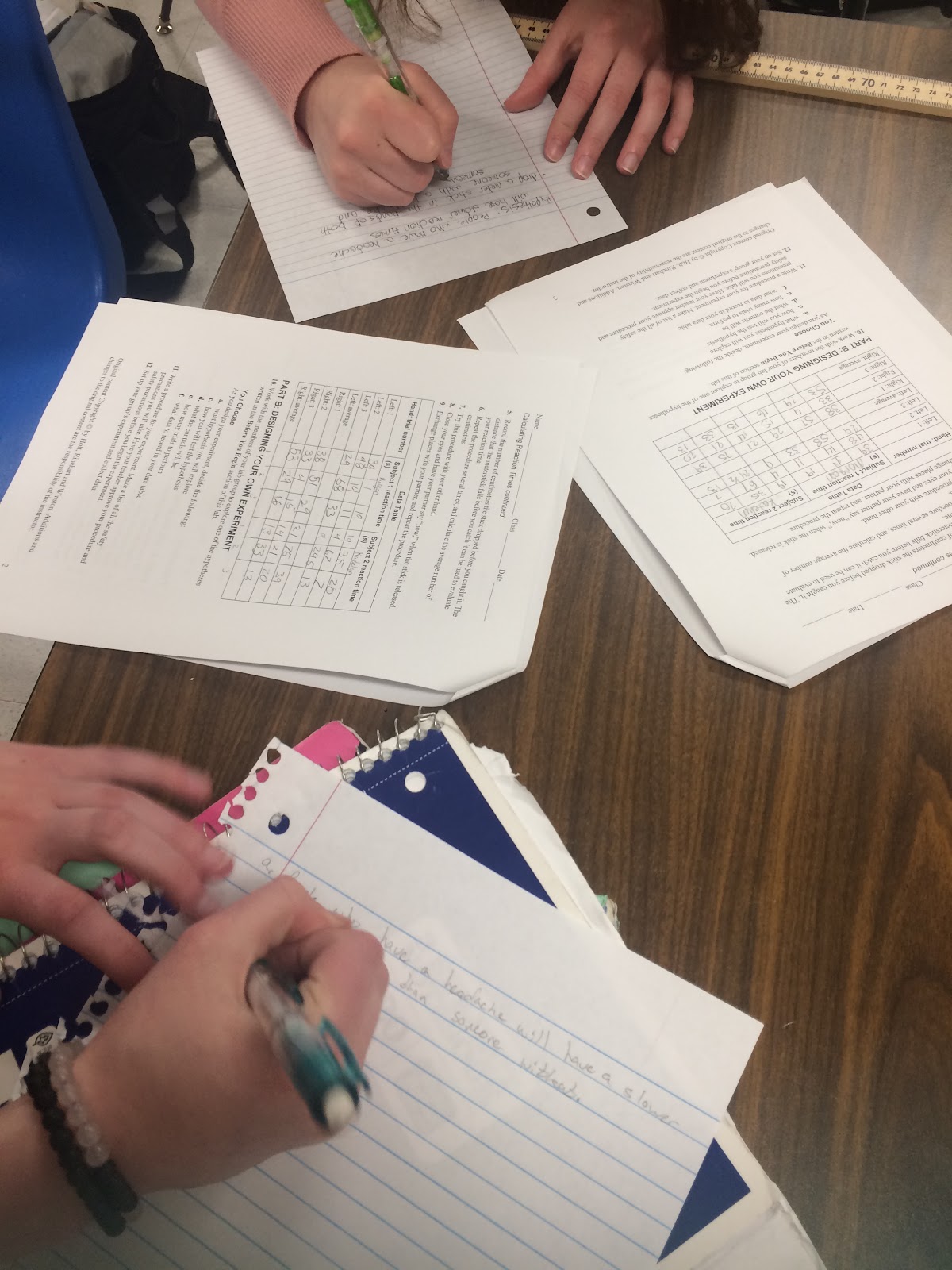
nervous systems reaction times. In order to test the reaction times of the nervous system, a
series of experiments were conducted and the results were recorded in a graph. After all of the
data had been compiled, questions on the experiment were completed by the students to further
engage them and compare data compiled by other students
Chadron High advanced biology class recently explored the nervous system, specifically the
nervous systems reaction times. In order to test the reaction times of the nervous system, a
series of experiments were conducted and the results were recorded in a graph. After all of the
data had been compiled, questions on the experiment were completed by the students to further
engage them and compare data compiled by other students
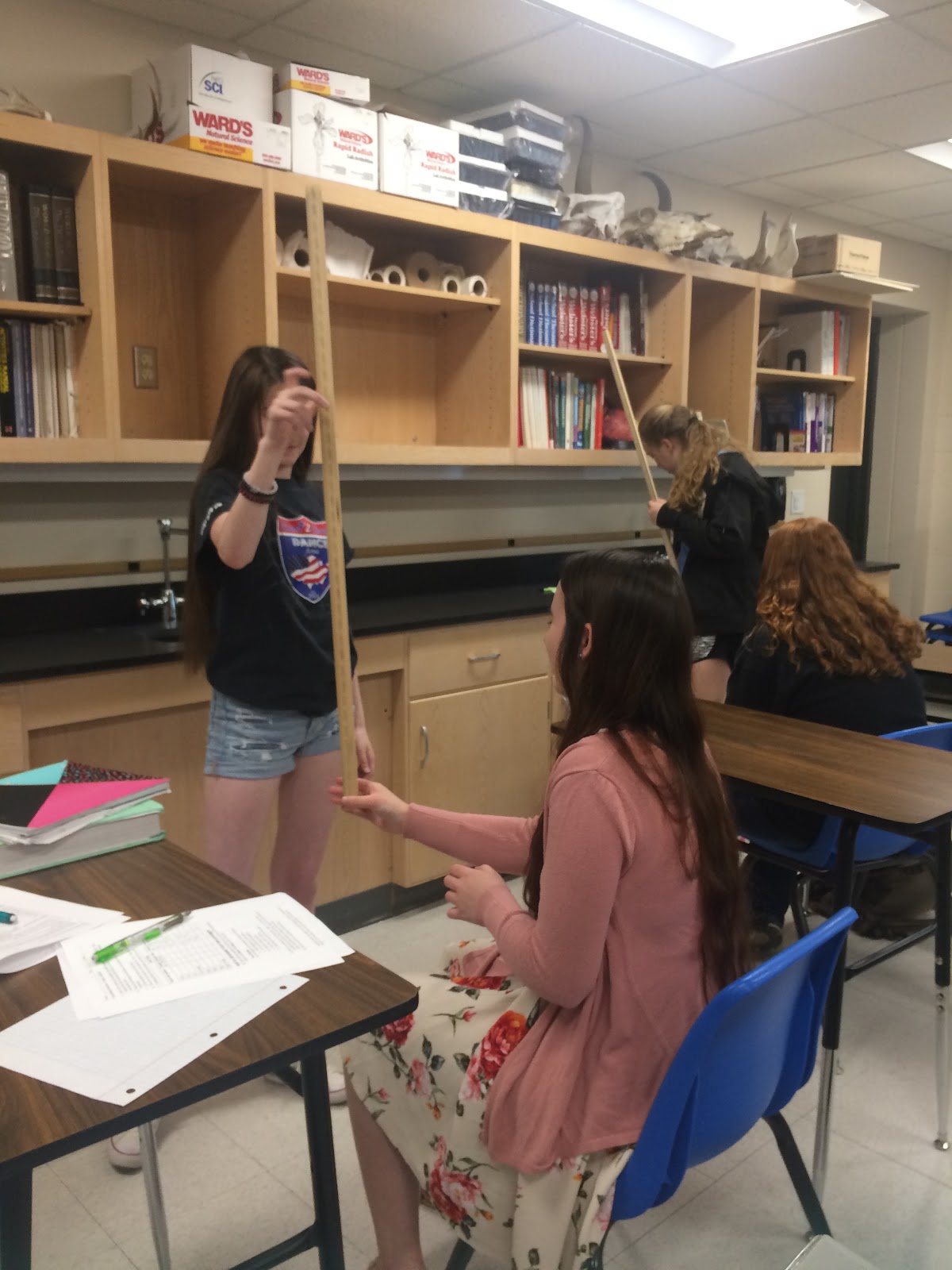
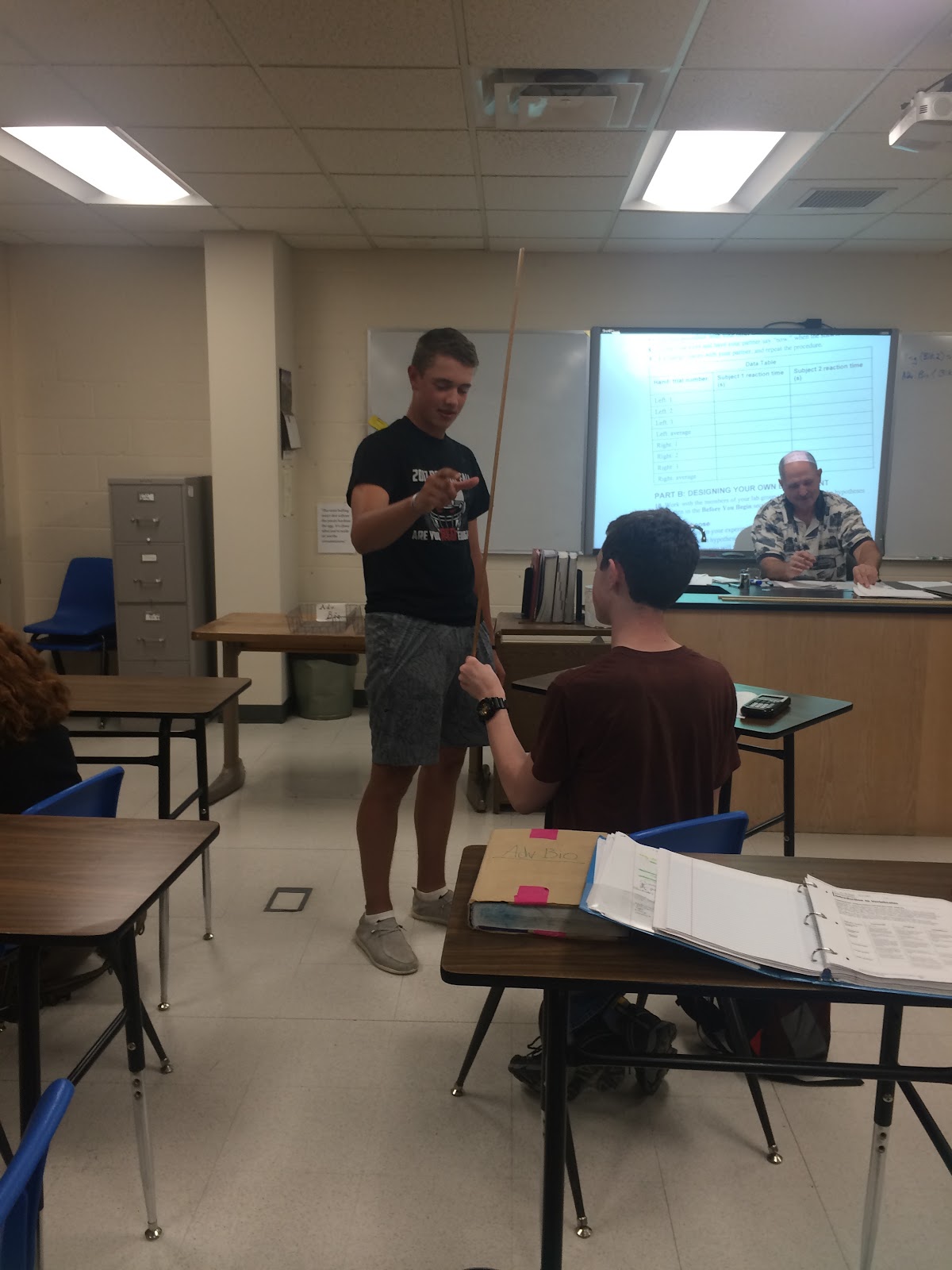
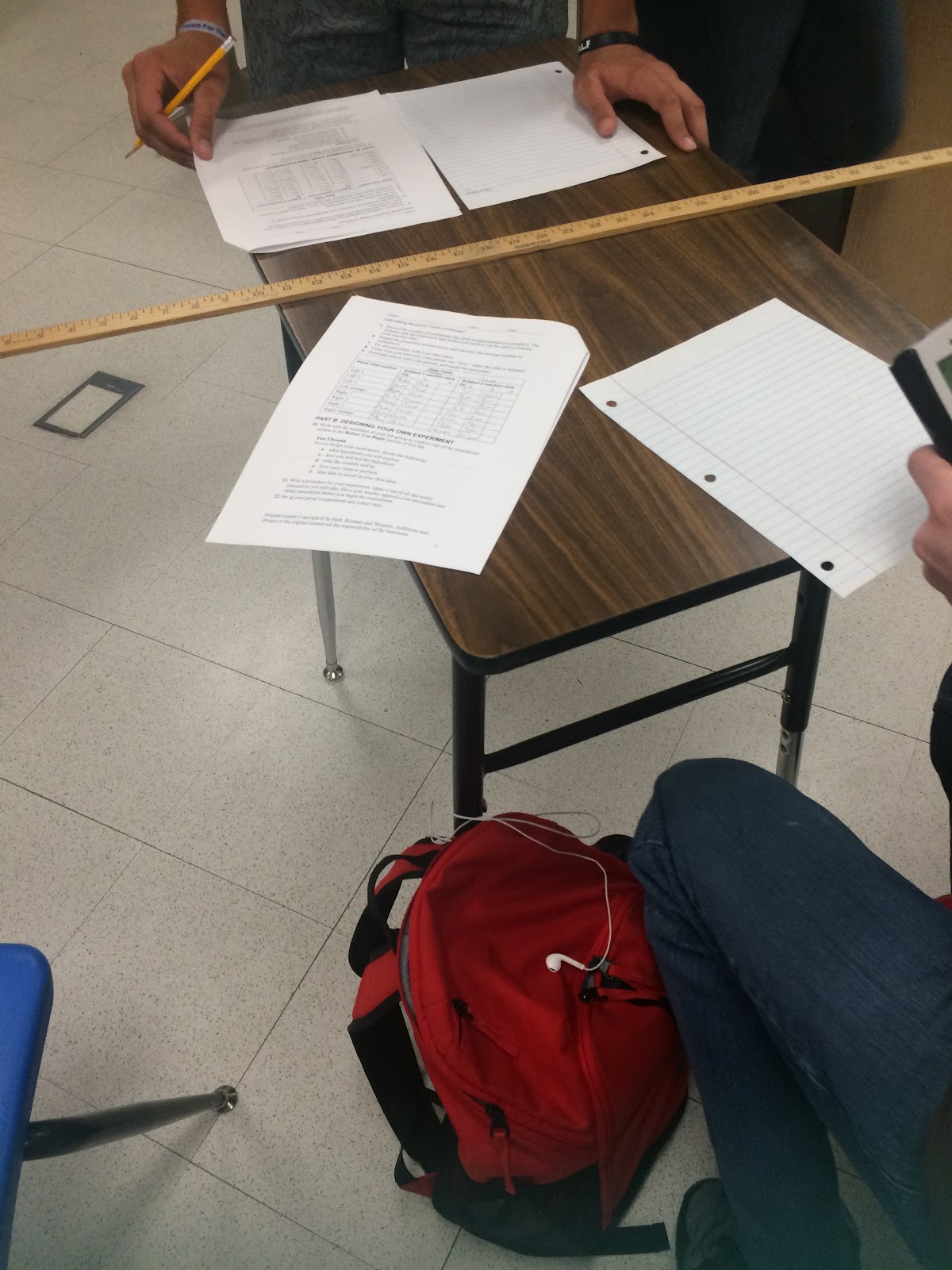
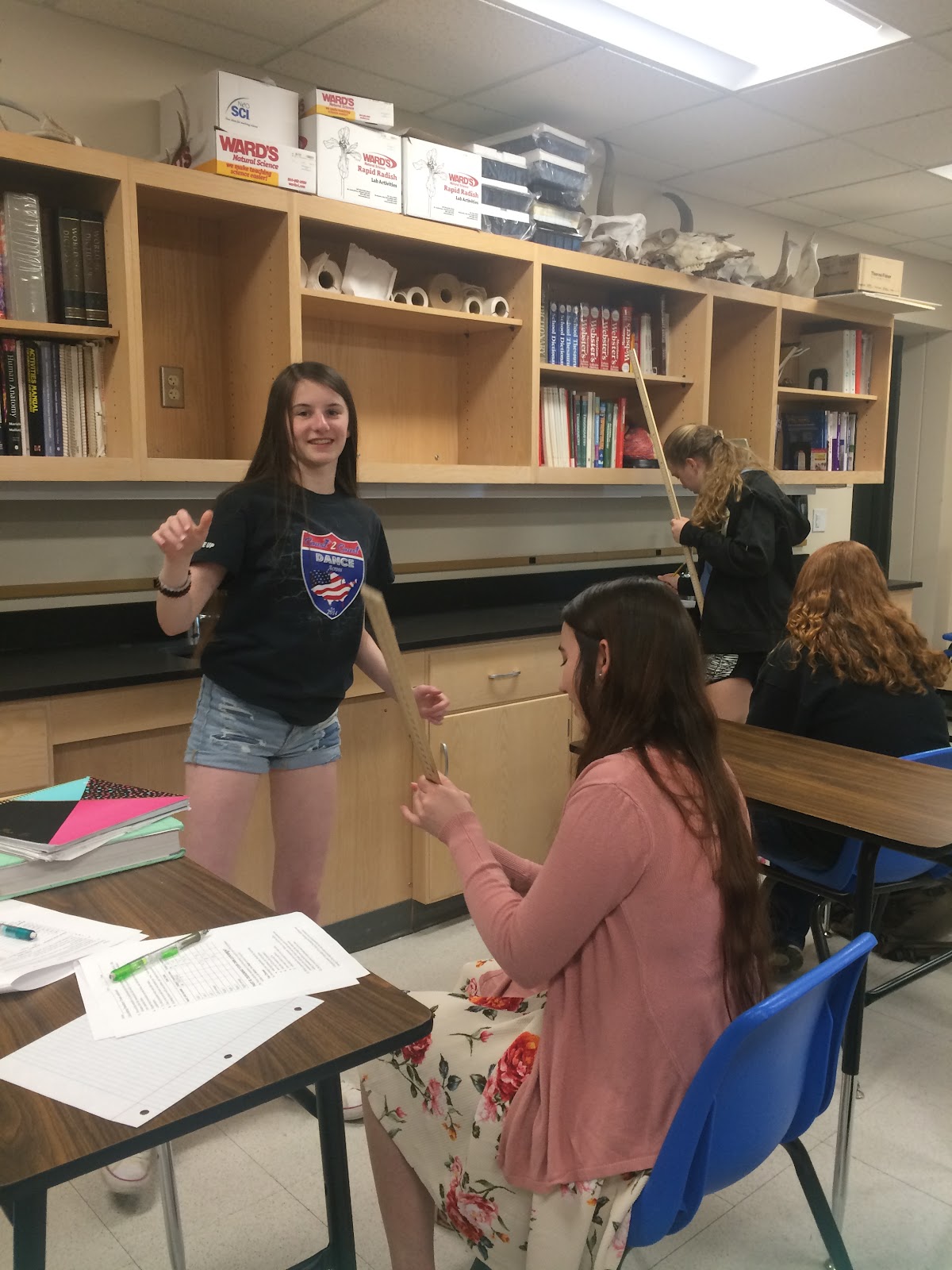
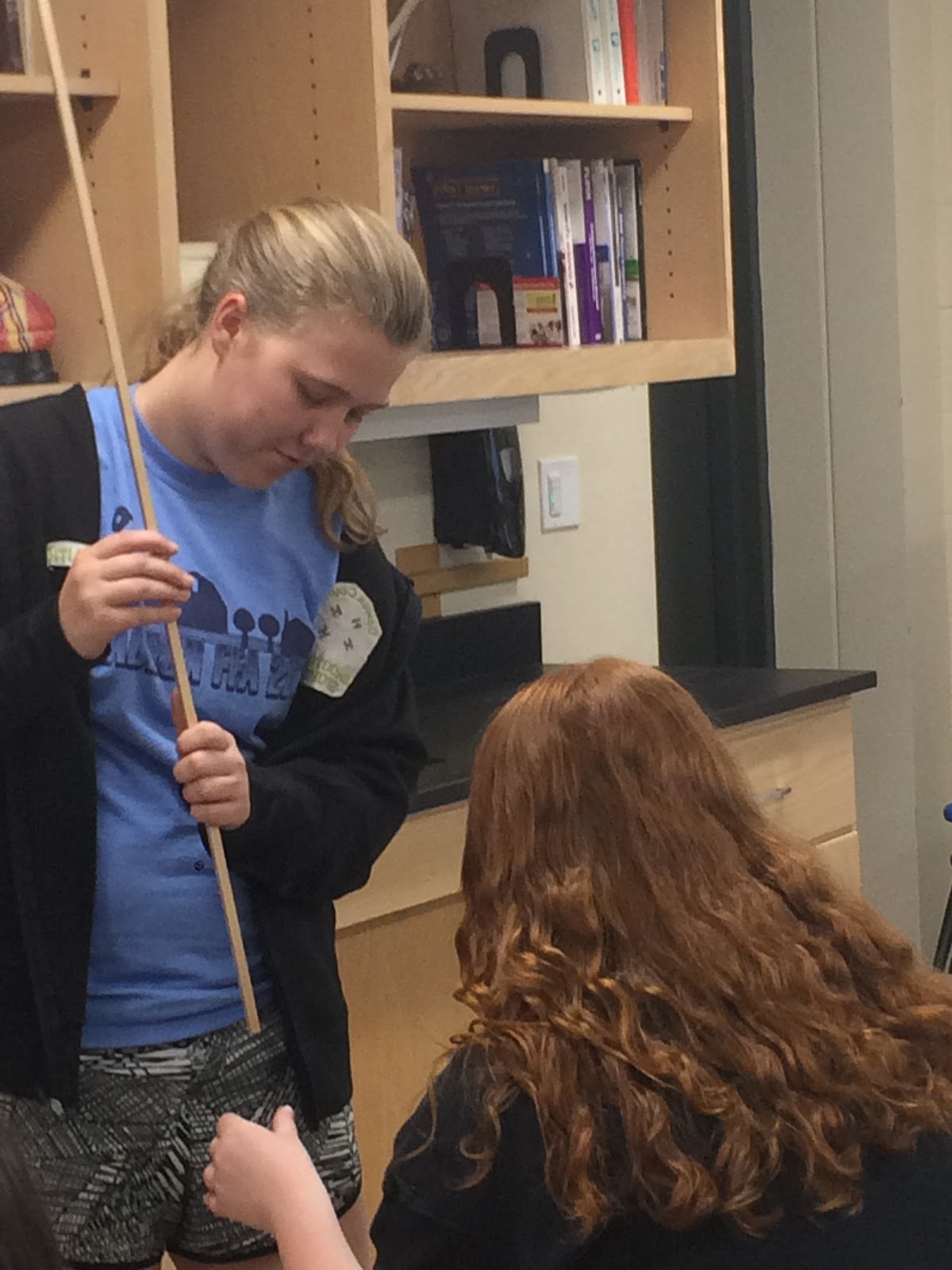
In the first experiment, students were to hold a meter stick approximately three centimeters
above the hand that was being tested. Then the meter stick would be dropped and the person
being tested would have to catch the meter stick as fast as they could. This would be repeated
for the opposite hand and person and recorded on a graph. The second experiment was the
same, only the person being tested had to close their eyes and the person dropping the meter
stick had to say go in order for the person to react. The third experiment would also be a
rendition of the first. The groups had to come up with their own experiment. One group
decided to test their reaction after having laid down on the ground for a few minutes. Another
decided to run up and down the stairs leading down to the central office a few times. The tests
conducted by the students were overall very creative.
above the hand that was being tested. Then the meter stick would be dropped and the person
being tested would have to catch the meter stick as fast as they could. This would be repeated
for the opposite hand and person and recorded on a graph. The second experiment was the
same, only the person being tested had to close their eyes and the person dropping the meter
stick had to say go in order for the person to react. The third experiment would also be a
rendition of the first. The groups had to come up with their own experiment. One group
decided to test their reaction after having laid down on the ground for a few minutes. Another
decided to run up and down the stairs leading down to the central office a few times. The tests
conducted by the students were overall very creative.
After the experiments, students had to answer an assortment of questions. These questions
included “Which hand had the quickest reaction time?”, “Why may each person/hand have a
different reaction time?”, and “Were there any trends that could be identified in the data?”. All
of these questions allowed the students to become more engaged in the experiments. Not only
would they have to compile the data they would also have to draw conclusions and make
connections with their group’s data and the other groups’ data as well.
included “Which hand had the quickest reaction time?”, “Why may each person/hand have a
different reaction time?”, and “Were there any trends that could be identified in the data?”. All
of these questions allowed the students to become more engaged in the experiments. Not only
would they have to compile the data they would also have to draw conclusions and make
connections with their group’s data and the other groups’ data as well.
These experiments were ultimately very beneficial to the students of Mr. Bradley’s advanced biology
class. The tests were not only informative but engaging and fun for the students. The experiments gave
a more in-depth understanding of the nervous system while also providing an opportunity to make
connections and draw conclusions. The skills gained by experiments completed in this classroom will
not only be used in this classroom, but in other classrooms in school, and those “classrooms” that may
appear throughout life.
class. The tests were not only informative but engaging and fun for the students. The experiments gave
a more in-depth understanding of the nervous system while also providing an opportunity to make
connections and draw conclusions. The skills gained by experiments completed in this classroom will
not only be used in this classroom, but in other classrooms in school, and those “classrooms” that may
appear throughout life.


Subscribe to:
Posts (Atom)